BOOK REVIEWS
BY DENISE COPELAND
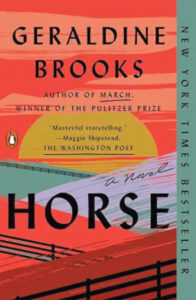
Horse
Author: Geraldine Brooks
–Reviewed by: Denise Copeland
For a horse who competed in only seven official races, Lexington secured an extraordinary place in American history. His victories filled newspapers, artists painted his likeness, and breeders coveted his bloodline. In Horse, Geraldine Brooks examines the knowledge and labor behind that glory, particularly the contribution of the Black horsemen who cared for him. She connects their lives to two people in modern Washington whose growing affection exposes how differently they experience the same country.
Born in Kentucky in 1850, Lexington began life as Darley, a colt bred by Dr. Elisha Warfield. At New Orleans’ Metairie Race Course in 1855, he covered four miles in seven minutes, 19¾ seconds. He won six of seven starts before deteriorating eyesight ended his racing career. At Woodburn Stud, he became North America’s leading sire for a record sixteen years, including two after his death. Nine of the first fifteen Travers Stakes winners were his offspring. Lexington died in 1875, aged twenty-five.
Brooks builds the historical story around Jarret, an enslaved groom whose future becomes bound to the horse’s. Her fictional Jarret is the son of Harry Lewis, a real Black trainer who had gained his freedom and helped develop the young horse. A real groom named Jarret appears in descriptions of a lost Thomas J. Scott painting, but little is known about his life. Brooks constructed his character using records of other accomplished Black horsemen. That distinction matters: Lexington’s achievements were preserved in detail, while the man caring for him received so little attention that a novelist had to reconstruct his story.
Jarret gives these chapters their emotional force. He understands Lexington’s moods, recognizes discomfort and protects him when an owner’s ambition threatens the animal’s welfare. His expertise earns responsibility without securing control over his own future. Owners can sell him, and every transaction threatens their bond. As Lexington loses his sight, his trust in Jarret becomes especially moving. Brooks gives their companionship tenderness while keeping the brutality of enslavement plainly in view.
Lexington’s remains eventually entered the Smithsonian’s collections, where his identity receded behind his use as a specimen. Later examination revealed evidence of an abscess associated with his blindness. His skeleton returned to Kentucky on loan in 2010. Brooks shifts that chronology for her 2019 storyline. Jess, a white Australian scientist, studies his skeleton, while Theo, a Black Nigerian American art history graduate student, investigates a discarded horse painting. She examines the animal’s structure; he considers the representation of the Black people working beside him.
Their first encounter gives the romance an uncomfortable foundation. Seeing Theo unlocking an expensive bicycle identical to hers, Jess suspects theft. Her own bike is farther along the rack. She does not openly accuse him, but Theo recognizes her assumption. Jess is mortified; he recognizes another familiar encounter with suspicion. Her embarrassment cannot erase the fact that she judged him before knowing anything about him.
When research brings them together again, attraction develops through museum visits, meals, conversation and physical intimacy. They argue about art, recover their humor and become interested in each other’s minds. These ordinary exchanges make their affection convincing. Yet Theo must decide how much vulnerability he can offer someone who has already misread him. Jess must hear experiences that unsettle her view of herself. His education, diplomatic family and Oxford polo background offer little protection against strangers’ assumptions.
The ending makes that vulnerability devastating. A police officer fatally shoots Theo while he is helping an injured woman, interpreting him as an attacker. The bicycle encounter acquires a terrible echo, although the consequences differ profoundly. Jess’s grief exposes how much of Theo she was still discovering. This is also where I have reservations: his death risks becoming chiefly an education for her and the reader. The intimacy and discomfort of their developing relationship offer a richer examination of misunderstanding.
Horse is strongest when Brooks gives these lives individual attention: Jarret’s intelligence, Lexington’s dependence on him, Theo’s ambitions and Jess’s imperfect efforts to understand. Its shifting periods sometimes interrupt the compelling stable-yard story, but they also bring neglected evidence into view. A painting, a pedigree and a damaged skull become reasons to reconsider whose achievements history has preserved.
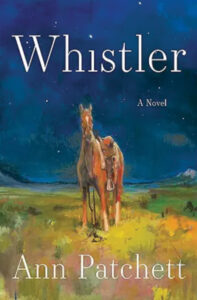
Whistler
Author: Ann Patchett
–Reviewed by: Denise Copeland
Families rarely end as neatly as divorce papers suggest, and Ann Patchett builds Whistler around the relationship that was never allowed a proper goodbye. Daphne Fuller, a 53-year-old English teacher, has a loving husband, a steady life and no reason to think a casual afternoon at the Metropolitan Museum of Art will rearrange her understanding of childhood. Then she sees Eddie Triplett, the stepfather who disappeared from her life more than 40 years earlier.
Eddie was once the safest person in nine-year-old Daphne’s world. After a winter car accident left them stranded, injured and waiting through the night, her mother abruptly ended the marriage and cut him off from the family. Daphne quietly accepted a child’s explanation: whatever happened must have been her fault. Their reunion allows Patchett to return to that night, to the story Eddie told about a horse named Whistler, and to the secrets adults so often mistake for protection.
Patchett is especially good at the emotional math of a family, including the old loyalties, partial truths and private bargains that continue to influence people decades later. Daphne’s psychologist sister, Leda, helps draw out memories she had learned to live around, while Eddie’s tenderness gives the novel its heart. He never treats their years apart as proof that their bond expired, and that quiet certainty is far more affecting than any grand declaration.
Readers who prefer sharp conflict may find the novel unusually gentle. Patchett fills its pages with decent people who listen, apologize and occasionally behave with a generosity that real families do not always manage before dessert. Yet the softness has purpose. Whistler is less concerned with exposing villains than examining the damage caused by silence, misplaced guilt and decisions made on behalf of a child who deserved the truth.
Patchett’s conclusion does not pretend lost time can be returned. It suggests something more believable: a relationship can be interrupted for decades and still remain real. Whistler is a beautifully written argument for giving old love its proper name, even after the family tree has been redrawn.
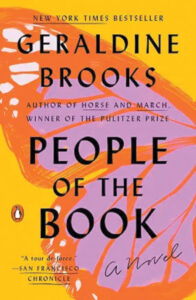
People of the Book
Author: Geraldine Brooks
–Reviewed by: Denise Copeland
A book can reveal far more than the words written upon its pages. It can carry the stain of a family dinner, a fragment of an insect’s wing, a grain of salt or a single white hair. In Geraldine Brooks’ extraordinary novel People of the Book, these nearly invisible remnants become witnesses, offering clues to the long and dangerous journey of one of the world’s most remarkable manuscripts.
The novel begins in Sarajevo in 1996, shortly after the Bosnian War. Hanna Heath, an Australian rare-book conservator, has been invited to examine the Sarajevo Haggadah, a beautifully illuminated Jewish manuscript rescued during the shelling of the city. Hanna is brilliant, guarded and far more comfortable with parchment, pigments and bindings than with the unpredictable demands of human relationships. To her, conservation is both science and detective work. Every stain, fiber and irregularity may contain part of the book’s history.
The Haggadah is a Jewish ceremonial text used during the Passover Seder to recount the Exodus from Egypt. The real Sarajevo Haggadah is believed to have originated in medieval Spain and is remarkable for its richly colored illustrations. Its survival seems almost improbable. It endured the expulsion of Jews from Spain, scrutiny during the Inquisition, Nazi occupation and the destruction surrounding the siege of Sarajevo.
Brooks uses those astonishing facts as the framework for an ambitious work of historical fiction. As Hanna studies the manuscript, she discovers several tiny mysteries within its binding: the wing of an unusual insect, wine stains, traces of salt and a white hair. Each clue opens a door into another century, allowing Brooks to imagine the people who created, owned, protected, damaged and ultimately saved the book.
The construction is particularly clever. Hanna’s story moves forward while the Haggadah’s story travels backward. The reader begins with its rescue in wartime Sarajevo, then follows it to Vienna in 1894, Venice in 1609, Tarragona in 1492 and finally Seville in 1480. With every step into the past, the manuscript becomes less of an artifact and more of a living record of the hands that touched it.
In wartime Bosnia, a Muslim museum curator risks his life to keep the Jewish volume from the Nazis. In Vienna, the book passes through a world of scholarship, prejudice and private desperation. In Venice, a Catholic priest charged with examining Jewish books for heresy must decide if the Haggadah will survive the Inquisition. In Spain, Jewish families confront forced conversion, exile and the destruction of a society in which Jewish, Muslim and Christian traditions had once existed in uneasy proximity.
The earliest portion of the story provides the novel’s most affecting revelation. Brooks imagines that the Haggadah’s luminous paintings were created by Zahra, an enslaved Muslim woman whose artistic gifts would otherwise have disappeared from history. Her work on a Jewish manuscript becomes an assertion of identity and a quiet refusal to be erased. The suggestion that a Muslim woman may have illustrated a Jewish sacred text using artistic traditions shared across cultures captures the novel’s central idea: history is rarely as orderly or divided as later generations would like to pretend.
Brooks does not present the Haggadah as a pristine object carried reverently through time. It is spilled upon, rebound, censored, hidden, stolen and handled by frightened people making dangerous choices. Its imperfections become its biography. The wine stain recalls a table and the people gathered around it. Salt carries the memory of flight and loss. The insect wing connects the manuscript to a particular landscape. The white hair leads Hanna toward the artist whose name history nearly forgot.
Hanna’s contemporary narration keeps this sweeping chronology grounded. Her investigation develops alongside a complicated relationship with Bosnian librarian Ozren Karaman and an increasingly painful confrontation with her formidable mother. Hanna has devoted her career to repairing damaged books, yet she has done little to examine the fractures in her own life. As the manuscript yields its secrets, her professional certainty begins to collide with questions of family, trust and belonging.
The modern storyline occasionally ventures into more conventional territory, particularly when romance, forgery and family revelations begin arriving in quick succession. Yet Hanna remains an effective guide because she teaches the reader how to look. Through her, a cracked clasp or discolored fiber acquires the suspense of a recovered letter. Her precise observations give Brooks a natural passage between laboratory science and historical imagination.
The title refers first to the Jewish people, traditionally known as the People of the Book, but Brooks steadily expands its meaning. The “people” are also the Muslims, Christians, scholars, artists, refugees, librarians and conservators whose lives become bound to this particular volume. Some attempt to destroy it. Others protect it at immense personal risk. Together, they form an unlikely community separated by centuries but joined through a single object.
People of the Book is ultimately a novel about survival, though not the clean, triumphant variety. The Haggadah survives because imperfect individuals decide, sometimes at considerable cost, that beauty, memory and knowledge deserve protection. Brooks transforms a rare manuscript into a witness to exile, prejudice, courage and cultural exchange. The book has no voice of its own, yet every mark upon it speaks.

The Calamity Book
Author: Kathryn Stockett
–Reviewed by: Denise Copeland
Sarah Kathryn Stockett waited seventeen years to publish a second novel, which places a rather unforgiving burden on The Calamity Club before its characters have even entered the room. Fortunately, Stockett returns to Mississippi with the qualities that made The Help so readable: an ear for Southern speech, a sharp eye for social hypocrisy and an abiding interest in women whom respectable society has badly underestimated.
The story opens in Oxford, Mississippi, in 1933, when the Depression has stripped away any polite fiction that security is distributed according to merit. Eleven-year-old Meg Lefleur has spent two years at the Lafayette County Orphan Asylum after her mother left her there on Christmas Eve. Classified among the older girls whom prospective parents are unlikely to choose, Meg protects herself with intelligence, suspicion and a refusal to believe she has been permanently abandoned. She is funny without becoming precocious for the convenience of the reader, and her determination gives the sprawling novel its strongest pulse.
Birdie Calhoun arrives in Oxford carrying a different variety of desperation. Unmarried, outspoken and skilled with numbers, she hopes her socially successful sister Frances will help the family Birdie has been supporting. Frances has acquired a wealthy husband and a carefully arranged life, but the household proves far less secure than its polished exterior suggests. Birdie’s bookkeeping eventually brings her into the affairs of the orphanage and into Meg’s orbit, where ledgers reveal that institutions can conceal cruelty as efficiently as families conceal debt.
Charlie, a resourceful woman with few remaining options, completes the novel’s central alliance. Her proposed solution to their problems is audacious, morally complicated and entertaining enough that readers may find themselves supporting conduct they would firmly condemn at a neighborhood association meeting. Stockett allows the women to be generous, exasperating, frightened and opportunistic, sometimes within the same conversation. Their friendship is not sentimental decoration; it is the practical arrangement that makes survival possible when every official system has failed them.
Beneath the adventure lies a disturbing account of how poor and unconventional women were judged by authorities empowered to decide who was fit to become a mother. Stockett incorporates the era’s eugenics movement and forced sterilization policies without turning the novel into a history lecture. The facts are horrifying precisely because they enter through the lives of characters readers have come to know, including girls who understand that being labeled troublesome can have consequences far beyond an afternoon in the matron’s office.
At more than 650 pages, The Calamity Club occasionally carries one complication too many, and its final convergence requires several pieces to fall into place with suspicious efficiency. Stockett’s characters, however, are strong enough to pull the machinery along. Meg provides the courage, Birdie the moral argument and Charlie the nerve, while the women surrounding them form a community built from necessity rather than social approval.
The Calamity Club is historical fiction with a generous appetite for plot, humor and righteous troublemaking. It acknowledges that desperation does not always produce noble decisions and that respectable people are often protected from the consequences of far worse ones. Stockett has written a substantial, spirited novel about women denied conventional power who become remarkably inventive once they stop waiting for permission.

Unreasonable Hospitality
Author: Will Guidara
–Reviewed by: Denise Copeland
Even if you don’t own a restaurant, manage a business, or have never spent a day working in the hospitality industry, I guarantee Unreasonable Hospitality will resonate with you. Will Guidara’s bestselling book uses the restaurant world as its backdrop, but its lessons about leadership, generosity, teamwork, and human connection apply to virtually every aspect of life.
In Unreasonable Hospitality, Guidara recounts his journey from ambitious restaurateur to co-owner of Eleven Madison Park, the New York restaurant that rose from respected fine dining establishment to being named the best restaurant in the world. While food remains part of the story, this book is ultimately about people, service, leadership, and the remarkable impact of making others feel genuinely seen.
His central philosophy is deceptively simple: hospitality is not merely a business function but an opportunity to create unforgettable human experiences. Throughout the book, he shares stories of employees going beyond expectations, from arranging once-in-a-lifetime surprises for guests to transforming ordinary interactions into lasting memories. These moments could easily veer into corporate motivational territory, but Guidara grounds them in authenticity and hard-earned experience.
Guidara writes with the pace and energy of a busy dining room during Saturday night service. The chapters move quickly, filled with colorful anecdotes, behind-the-scenes challenges, and lessons learned through both success and failure. Even readers who have never worked in hospitality will find themselves invested in the pressure, creativity, and teamwork required to deliver excellence night after night.
The restaurant industry serves as the backdrop, but the lessons extend far beyond dining rooms and reservation books. Guidara explores leadership with refreshing practicality, emphasizing trust, empowerment, and the importance of cultivating a culture where people feel valued. His observations resonate whether you manage a restaurant, run a business, or simply interact with other humans on a regular basis.
The book’s greatest strength lies in its optimism. In an era increasingly dominated by efficiency, automation, and transactional interactions, Guidara champions generosity and personal connection. His belief that extraordinary experiences are often created through small, thoughtful gestures feels both refreshing and surprisingly relevant.
Some readers may find the book occasionally repetitive, as its central message is reinforced through multiple examples. Others may question whether such levels of hospitality are practical in every setting. Yet these are minor quibbles in a work that consistently delivers insight and inspiration.
Guidara serves up a compelling case for raising standards, not through perfection, but through genuine care. By the final chapter, readers may find themselves looking differently at customer service, leadership, and even everyday encounters.
A thoughtful and highly engaging book that proves excellence often begins with making people feel important. You may never look at a restaurant reservation, hotel check-in, or business meeting quite the same way again.

The Barn
Author: Wright Thompson
–Reviewed by: Denise Copeland
Wright Thompson has built a reputation as one of the most thoughtful narrative journalists of his generation, known for blending sports, culture, and Southern identity into richly textured storytelling. A Mississippi native, he has long explored the complexities of the region he calls home, often returning to its history, contradictions, and unresolved tensions. The Barn grows out of that lifelong engagement. Thompson has spoken about being haunted by the story of Emmett Till since childhood, and, more specifically, by the physical presence of the barn in Money, Mississippi, where part of the crime took place. The structure itself became a kind of obsession, a symbol of how history can remain hidden in plain sight, shaping the land and the people who live on it. That fixation ultimately inspired him to write a book that is as much about memory and place as it is about the crime itself.
The Barn is less a conventional true crime book and more a reckoning with American memory, place, and the long shadow of racial violence. Centered on the 1955 lynching of Emmett Till, Thompson approaches the story indirectly, using the barn as both a physical anchor and a metaphor for the nation’s uneasy relationship with its past.
Rather than retelling the case in a straightforward, chronological way, Thompson builds a layered narrative that moves between history, personal reflection, and cultural critique. The result is immersive and, at times, deliberately uncomfortable. He is not interested in offering neat closure. Instead, he examines how stories are preserved, distorted, or ignored depending on who is telling them and why.
One of the book’s greatest strengths is its sense of place. Thompson writes about the Mississippi Delta with a mix of intimacy and scrutiny, capturing its beauty while never letting the reader forget what the land has witnessed. The landscape becomes a character in its own right, carrying echoes of violence and silence. His prose often leans lyrical, occasionally bordering on poetic, which may not appeal to readers looking for a brisk, fact-driven account, but it deepens the emotional weight of the narrative.
The barn itself is a striking narrative device. Thompson uses it to explore how physical spaces hold history, even when communities attempt to move on or look away. The question hovering throughout the book is not just what happened to Emmett Till, but how America chooses to remember what happened. Museums, markers, and memorials are all part of that conversation, and Thompson interrogates them with a critical eye.
At times, the book’s structure can feel fragmented. Thompson circles the subject rather than confronting it head-on, revisiting themes and images in a way that mirrors memory more than traditional storytelling. For some readers, this approach may feel repetitive or indirect. For others, it will feel purposeful, reinforcing the idea that this history cannot be contained in a single narrative thread.
What ultimately sets The Barn apart is its moral urgency. Thompson does not allow the reader to remain a passive observer. He challenges the notion that this is simply a story of the past, making it clear that the legacy of Emmett Till’s murder continues to shape the present. The book asks difficult questions about accountability, remembrance, and the stories a nation tells itself to feel comfortable.
This is not an easy read, nor is it meant to be. It is reflective, probing, and at times haunting. Readers expecting a traditional true crime narrative may need to adjust their expectations, but those willing to engage with its deeper themes will find a work that lingers long after the final page.
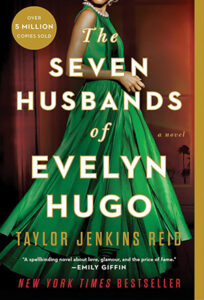
The Seven Husbands of Evelyn Hugo
Author: Taylor Jenkins REid
–Reviewed by: Denise Copeland
Even if celebrity gossip isn’t your thing, The Seven Husbands of Evelyn Hugo will captivate you. Taylor Jenkins Reid takes readers behind the velvet curtain of old Hollywood and delivers a novel filled with glamour, ambition, scandal, heartbreak, and enough secrets to keep the pages turning late into the night.
The story begins when aging screen legend Evelyn Hugo, one of Hollywood’s most elusive and iconic stars, selects an unknown magazine writer, Monique Grant, to tell her life story. What follows is a sweeping account of Evelyn’s rise from poverty to stardom, her carefully constructed public image, and the seven husbands who helped shape her remarkable journey.
Reid cleverly structures the novel around each of Evelyn’s marriages, but don’t be fooled by the title. While the husbands certainly play their roles, this is ultimately a story about identity, sacrifice, love, and the cost of chasing fame. Each marriage reveals another layer of Evelyn’s character, exposing both her ruthless ambition and her profound vulnerability.
Evelyn herself is one of the most fascinating protagonists to emerge in contemporary fiction. She is brilliant, manipulative, courageous, selfish, loyal, and deeply human, often all at the same time. Readers may not always agree with her choices, but they will understand them. Reid has created a character who feels so authentic that many readers find themselves forgetting she never actually existed.
The Hollywood backdrop sparkles with old movie premieres, studio politics, designer gowns, and tabloid headlines. Yet beneath the glamour lies a thoughtful examination of how women, particularly women in the public eye, are expected to navigate power, beauty, aging, and public perception. Reid handles these themes with nuance and emotional depth.
The novel’s pacing is nearly flawless. Each revelation arrives at just the right moment, building momentum toward a conclusion that is both surprising and deeply satisfying. There are twists, but unlike many contemporary novels, the surprises serve the characters rather than simply shocking the reader.
Some critics have argued that certain plot developments stretch credibility. Then again, Hollywood has never been known for its restraint. Reid wisely embraces the larger-than-life nature of her setting while keeping the emotional core grounded in genuine human relationships.
What lingers long after the final page is not the fame, the wealth, or even the marriages. It is Evelyn’s search for authenticity in a world built on illusion and the sacrifices she makes to protect the people she loves.
Reid delivers an irresistible blend of historical fiction, family drama, romance, and Hollywood intrigue. Equal parts glamorous and heartbreaking, The Seven Husbands of Evelyn Hugo reminds us that behind every public legend lies a private story few people ever truly know.
A compelling, beautifully layered novel that earns every bit of its popularity. Prepare to clear your schedule because once Evelyn starts talking, you won’t want to stop listening.
Denise Copeland and Buffey Cassidy are co-presidents of the Cambridge Book Club, a distinguished literary society in Martin County. They guide the club through thoughtful explorations of numerous works each year and host local authors to celebrate literature, cultivate community, and savor the enduring pleasures of reading.
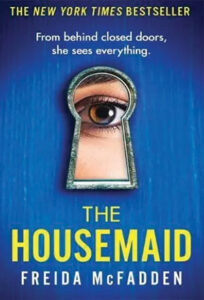
The Housemaid
A novel by: Freida McFadden
–Reviewed by: Denise Copeland
Freida McFadden’s The Housemaid is a psychological thriller that grabs hold from the first chapter and refuses to let go. Its a seemingly straightforward story about Millie, a desperate young woman who accepts a live-in housekeeping position with a wealthy family, which quickly spirals into an unsettling game of manipulation, deception, and hidden motives.
The Winchester household appears picture perfect on the surface, but beneath the polished exterior lies a web of control, intimidation, and psychological warfare. The pacing is relentless, with short chapters and carefully timed revelations that make it nearly impossible to stop reading. Just when you think you’ve figured out the truth, McFadden deftly shifts the narrative.
I listened to the audiobook, which made the story feel even more immersive. Nina’s erratic behavior, relentless mind games, and emotional manipulation created such a palpable sense of unease that I felt genuinely frustrated on Millie’s behalf. Of course, that’s part of McFadden’s brilliance. People trapped in toxic situations rarely have the clarity that outsiders do.
The Housemaid is brilliantly effective because of its exploration of power dynamics behind closed doors. The novel captures the way emotional manipulation can distort reality, causing victims to doubt their instincts while outsiders remain oblivious to what is really happening.
Parts of the “The Housemaid” hit me in an uncomfortable way. While the circumstances are far more dramatic than everyday life, the portrayal of coercive control, gaslighting, and a carefully crafted public façade of a charming yet deeply disturbed individual felt unnervingly authentic. Having been married to someone I would politely describe as “not very stable”, I recognized patterns of behavior which made certain scenes far more disturbing than they might be for the average reader. McFadden understands that the most frightening people are not always the ones who appear dangerous.
Lauryn Allman’s audiobook narration deserves special recognition. Her performance brought an added layer of realism to her portrayal of Millie. Whether intentional or not, Millie carried a subtle New York, almost Brooklyn-style cadence that perfectly suited her no-nonsense personality and troubled past. In contrast, Nina’s polished, controlled manner of speaking created an immediate distinction between the two women. The vocal choices helped bring the characters to life and heightened the tension throughout the story. More than once, I found myself talking back to the audiobook, urging Millie to trust her instincts and get out while she still could.
Fans of psychological suspense will find plenty to enjoy here: shocking twists, unreliable perceptions, escalating tension, and a finale that delivers on its promises. Yet beneath the thriller framework lies a thoughtful examination of how easily appearances can deceive and how difficult it can be to recognize abuse when it wears a convincing mask.
The Housemaid is a fast paced, addictive read that offers more than simple shock value. It is both an entertaining thriller and a chilling reminder that the most dangerous stories are often the ones that feel just a little too real.
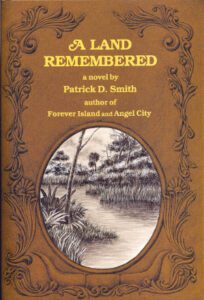
A Land Remembered
A novel by: Patrick D. Smith
–Reviewed by: Denise Copeland
Patrick D. Smith’s A Land Remembered is a sweeping and unforgettable novel that captures the raw essence of Florida before highways, resorts, and subdivisions, a place of beauty, danger, and unrelenting struggle. Through vivid storytelling and unforgettable characters, Smith transports readers through more than a century of change, from the mid-1800s frontier to the modern age. What results is not only the story of a family, but also of a land and its transformation.
At its heart, the novel follows the MacIvey family across three generations. Tobias MacIvey, a poor but determined pioneer, moves his family into the wilds of Florida to start anew. Life for Tobias, his wife Emma, and their son Zech is hard, the swamps are filled with mosquitoes, panthers, and floods, yet their courage and perseverance define the early chapters of the state’s history. Their story embodies the grit and endurance of the pioneers who tamed the wilderness and built the foundations of modern Florida.
Smith paints each scene with such realism that you can almost hear the crack of whips on cattle drives, feel the thick, humid air, and see the sun setting over the Everglades. Tobias’s friendship with the Seminoles and freed Black settlers reveals the deep humanity and cooperation often left out of history books. These moments of shared survival are among the novel’s most moving.
As the story continues through Zech and his son Solomon (“Sol”), Smith explores love, ambition, and loss with heartbreaking honesty. Zech’s divided loyalties between his wife Glenda and his Seminole love Tawanda reflect the complexity of life in a time when race and identity were in flux. When the novel transitions to Sol’s generation, we see the toll of progress, the rise of Miami, the draining of the land, and the great Okeechobee flood that reshaped South Florida forever. Sol’s wealth and success come at a cost: the fading memory of the wild, unspoiled Florida his grandfather once knew.
A Land Remembered is truly remarkable and captivating. Even readers who aren’t naturally drawn to history will find themselves swept up in this powerful, human story, reminding us that progress often demands sacrifice, but the land, and the spirit of those who came before, will always be remembered.
A Land Remembered is one of the best books I’ve ever read about Florida. Smith doesn’t romanticize the hardships, but he does make you understand the grit, determination, and sacrifices that shaped Florida long before it became the place we know today. If you’ve ever wondered what Florida was like before the condos, highways, and crowds, this book offers an insightful and unforgettable answer. It’s a novel I would recommend to anyone who loves Florida, history, or simply a well-told story.
Denise Copeland and Buffey Cassidy are co-presidents of the Cambridge Book Club, a distinguished literary society in Martin County. They guide the club through thoughtful explorations of numerous works each year and host local authors to celebrate literature, cultivate community, and savor the enduring pleasures of reading.
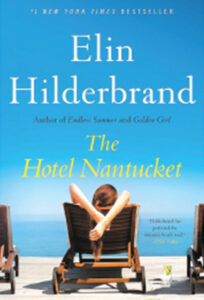
The Hotel Nantucket
A novel by: Patrick D. Smith
–Reviewed by: Denise Copeland
The Hotel Nantucket is a shimmering summer novel that blends romance, reinvention, and a touch of the supernatural. It’s the story of second chances — for a seaside hotel, for the people who work within its walls, and even for a ghost who refuses to leave. True to Hilderbrand’s signature style, the novel offers a lively ensemble of characters whose tangled relationships and personal transformations unfold against the picturesque backdrop of Nantucket Island, complete with sunlit beaches, salt air, and the subtle social hierarchies that define island life. The setting itself becomes a character, shaping both mood and momentum.
At the heart of the story is Lizbet Keaton, the capable and newly single manager tasked with resurrecting the once-glamorous but long-abandoned Hotel Nantucket. After discovering her partner’s infidelity, Lizbet is determined to rebuild her life, and the hotel’s grand reopening becomes her chance to prove herself, both professionally and personally. She assembles a staff as eclectic as the island itself, a mix of locals, dreamers, and escapees from their own messy pasts, each bringing their own emotional baggage to the project. Together, they must impress a secretive and famously harsh hotel reviewer known only as Shelly Carpenter, whose elusive five-key rating could make or break their success and restore the hotel’s former prestige, placing enormous pressure on every detail.
Hilderbrand excels at crafting intersecting story-lines, and here the dynamics between the hotel’s staff and guests form a vibrant web of tension, attraction, and redemption. There’s Chad, the handsome, quietly complicated concierge with a hidden past. Magdalena, the young chambermaid navigating both romance and ambition, and Kimber, a social media influencer whose picture-perfect persona masks her insecurities. Hilderbrand deftly balances the characters’ stories like guests checking in and out of an emotional resort, allowing each arc to unfold with just enough intrigue to keep the pages turning while maintaining a cohesive narrative rhythm.
Threaded through all of this bustle is Grace Hadley, the hotel’s resident ghost. A young maid who perished in a tragic fire in 1922, Grace has haunted the hotel for decades, trapped between worlds by the mystery of her death and her longing for justice. But Grace isn’t a menacing spirit, she’s a gentle observer, often wry and surprisingly compassionate. Her ghostly perspective adds depth and charm, transforming the novel from simple summer escapism into something more reflective. Through Grace’s eyes, we see the guests’ vulnerabilities laid bare, their loneliness and secrets, and their yearning for connection, as well as the quiet passage of time within the hotel’s storied walls, adding a historical layer.
Beneath the breezy beach-town setting lies a meditation on forgiveness and rebirth. Lizbet’s determination to restore the hotel mirrors her own inner renovation: peeling back the wallpaper of heartbreak to rediscover her strength. Through the slow mending of relationships, The Hotel Nantucket reveals itself as a meditation on belonging and the quiet strength it takes to begin again.
Hilderbrand balances lightness with emotional weight. It’s an easy, sun-drenched read on the surface, but there is a deeper current running through it that feels grounded. I found myself drawn not just to the setting, but to the idea that places, like people, can be restored with enough care and intention.
The Wedding People
A novel by: Alison Espach
–Reviewed by: The Cambridge Book Club
Espach has a particular talent for finding humor in emotional free fall, and The Wedding People may be her most precise balancing act yet. At once sharply funny and quietly devastating, the novel examines grief, reinvention, and the strange intimacy of being surrounded by strangers at a celebration you were never meant to attend. It is a story that understands how life’s most disorienting moments rarely arrive with solitude. Instead, they tend to unfold in the middle of noise, expectation, and other people’s joy.
The story centers on Phoebe Stone, a woman who arrives alone at a lavish seaside hotel during peak wedding weekend. She is simply there, carrying a heavy private sorrow that contrasts spectacularly with the champagne fueled joy unfolding around her. From the start, there is a quiet tension in watching Phoebe occupy a space that is both physically open and emotionally closed off to her.
Through a series of awkward encounters and unexpected conversations, Phoebe becomes entangled with members of the wedding party, each wrestling with their own anxieties beneath the satin and smiles. What begins as a backdrop gradually reveals itself as a web of interconnected insecurities, making Phoebe less of an outsider than she first appears.
Espach excels at writing characters who feel startlingly human. Phoebe is observant, dry, emotionally raw, and often very funny without trying to be. Her inner commentary cuts through wedding pageantry with surgical precision, skewering rituals that promise happiness while quietly pressuring everyone involved. Yet beneath the wit is a vulnerability that never feels performative. The supporting cast is equally well drawn, especially the bride, whose carefully constructed certainty begins to fracture as the weekend unfolds. Secondary characters who might have remained caricatures in another novel are instead given depth, their motivations layered and often contradictory.
What heightens The Wedding People beyond a clever premise is Espach’s control of tone. The novel never mocks grief, nor does it sentimentalize healing. Instead, it allows humor and pain to coexist on the same page, often within the same paragraph. Laughter becomes a coping mechanism rather than an escape, and the result feels genuinely honest. There is a rhythm to the writing that mirrors real emotional experience, where absurdity and sorrow frequently arrive hand in hand.
Perhaps the novel’s greatest strength is its refusal to offer easy resolutions. No one is magically fixed by the final chapter. Instead, there is a sense of movement, of subtle shifts in understanding rather than dramatic transformation. That restraint feels refreshing, especially in a story set against an event that traditionally demands tidy endings and lifelong promises. Espach trusts her readers to sit with ambiguity, and that trust pays off.
The Wedding People is a smart, observant, and deeply empathetic novel that will resonate with anyone who has ever felt out of step with the celebration around them. It speaks to the quiet dissonance of being present but not entirely included, of smiling through moments that do not quite belong to you. Espach proves once again that she understands the comedy of discomfort and the quiet bravery required to keep showing up when life does not resemble the brochure.
Perfect for readers who appreciate emotional intelligence served with wit, this is a book that lingers well after the cake is cut and the guests have gone home. It invites reflection long after the final page, not through grand revelations but through the accumulation of small, truthful moments that feel uncomfortably familiar in the best possible way.
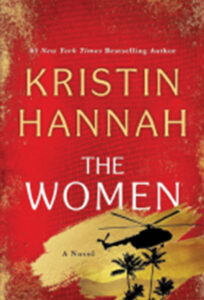
The Women
A novel by: Kristin Hannah
–Reviewed by: Denise Copeland
A powerful, unflinching, and deeply human novel that shines a long-overdue light on the women who served as nurses during the Vietnam War. In classic Hannah fashion, it is emotionally immersive equal parts heartbreak, grit, determination and grace.
At the center of the story is Frances “Frankie” McGrath, a sheltered young woman from an affluent California family who enlists in the Army Nurse Corps almost on impulse, determined to prove to herself and to everyone else that she is braver and more capable than the world assumes. Once she arrives in Vietnam, Frankie’s transformation is swift and profound. Hannah brings the chaos of the field hospitals to life with startling clarity: the helicopter rotors vibrating the ground, the relentless stream of wounded soldiers, the sensory overload of a war zone where every second counts. There is no romanticizing here; the book honors the truth of what these women endured, and the emotional cost of saving lives in a place where hope was often in short supply.
One of the more frustrating and telling threads in the story is the way Frankie’s father refuses to recognize her service for what it was. Despite everything she endured and contributed during the war, he clings to a narrow, outdated idea of who gets to be called a hero, and Frankie simply doesn’t fit that mold in his eyes. His silence and dismissal carry weight, not just as a personal rejection, but as a reflection of a broader tendency to overlook the role women played.
But the most intriguing bond is between Frankie and the other nurses. Their sisterhood is fierce, funny, and grounding, an anchor amid trauma. Through them, Hannah highlights the resilience of women who held steady in circumstances that would have broken many. These friendships become the beating heart of the story, giving it warmth even in its darkest moments.
But The Women isn’t just a war novel. The second half explores the quieter, often overlooked battle the nurses faced when they returned home. Instead of gratitude, they encountered disbelief, dismissal, and a culture determined to forget the war entirely. Frankie’s struggle to reintegrate into civilian life is written with painful authenticity. She grapples with PTSD, complicated family dynamics, and a society unprepared to acknowledge women’s contributions. Hannah handles these themes with sensitivity, reminding us that wounds don’t always bleed visibly.
Throughout the novel, the writing is cinematic yet intimate. Hannah’s gift lies not only in crafting sweeping emotional arcs but in capturing small, devastating moments that reveal character: a trembling hand, a worn photograph tucked into a pocket, a half-finished letter home. These details make the story feel lived-in and real.
The audiobook deserves its own spotlight. The Women by Kristin Hannah is brought to life by Julia Whelan, whose narration elevates every moment of the story. At just under 15 hours, the Macmillan Audio production is immersive without ever feeling long, and Whelan’s performance is a big reason why. She’s one of the most respected voices in audiobooks for a reason, and here, she delivers something that feels both powerful and deeply personal.
Ultimately, The Women is gripping, heart-rending, and deeply respectful. Whether you’re drawn to historical fiction, character-driven drama, or stories that amplify forgotten voices, this book earns a spot on your must-read list.
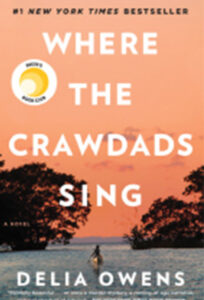
Where The Crawdads Sing
A novel by: Delia Owens
–Reviewed by: The Cambridge Book Club
With the precision of a biologist and the soul of a poet, Delia Owens creates a place so tangible you can taste the salt in the air and hear the cries of distant herons. It’s a novel steeped in atmosphere, loneliness, longing, and above all fierce, unyielding resilience.
At the center of the story stands Kya Clark, a child abandoned not once, but repeatedly, left to piece together her world in a shack at the edge of the water. Owens does not soften the blows life deals Kya. Instead, she shows us how a young girl learns to make a home from what others see as wilderness and to build a life from scraps of kindness, instinct, and curiosity. Kya grows into a woman whose intelligence runs deep, whose heart remains tender despite every reason for it to harden, and whose connection to the marsh becomes both sanctuary and identity. Her relationship with nature is not a hobby or backdrop, it is the love story that anchors the entire novel.
The book’s structure moves between Kya’s formative years and the later investigation of Chase Andrews’ death, a shift that creates a slow-burn tension that builds with every chapter. The mystery is compelling, but Owens never sacrifices emotional depth for plot. Instead, she uses the suspense to peel back layers of social prejudice, exposing how quickly a community can turn on someone it never attempted to understand.
Owens invites us so deeply into Kya’s quiet world that her joys feel like triumphs, and her betrayals land with devastating clarity. Her romance, her art, her hunger for love, for connection, for belonging are rendered with such honesty that you can’t help but ache with her. Even secondary characters feel textured and human, especially Tate, whose gentle guidance and genuine affection offer Kya her first glimpse of being seen.
Owens’ prose is lush but never indulgent. Every metaphor is purposeful, every moment in the marsh layered with meaning. The natural world becomes a mirror, reflecting the instinctive push and pull of survival, attraction, adaptation, and self-defense. In Kya’s story, biology becomes metaphor, and metaphor becomes truth.
In the end, Where the Crawdads Sing is an exploration of what it means to be othered, to be underestimated, to find strength in solitude, and to carve out beauty even when the world refuses to make space for you.
Denise Copeland and Buffey Cassidy are co-presidents of the Cambridge Book Club, a distinguished literary society in Martin County. They guide the club through thoughtful explorations of numerous works each year and host local authors to celebrate literature, cultivate community, and savor the enduring pleasures of reading.
As an Amazon Associate, we earn from qualifying purchases.
